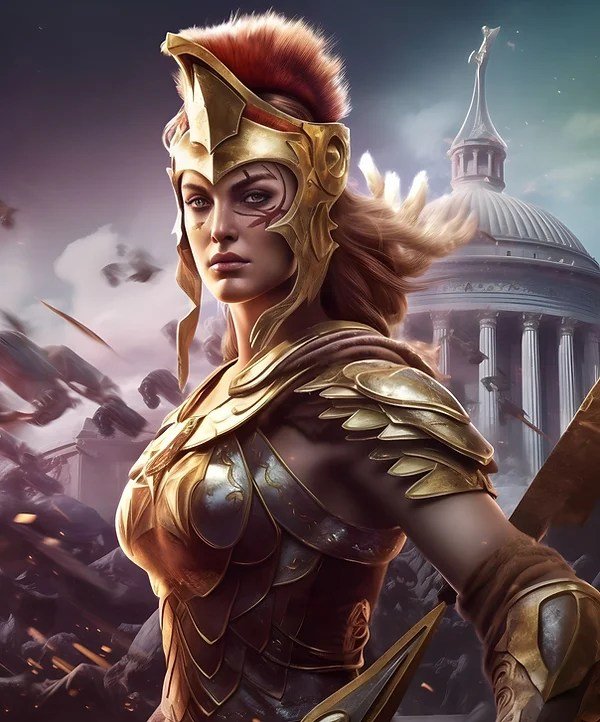
From the Parthenon's serene grandeur to the battlefields of digital gaming, the figure of Athena has always commanded respect, intellect, and strategic might. She is more than just a mythological character; she's an archetype that continues to evolve, inspiring creators and thinkers across millennia. Exploring Athena in Art, Literature, and Modern Adaptations reveals a timeless legacy that resonates with our deepest aspirations for wisdom, strength, and justice.
Her story isn't just about ancient gods and heroes; it's about the enduring power of ideas, leadership, and the crucial role of intelligence in navigating a complex world.
At a Glance: What You'll Discover About Athena's Enduring Legacy
- Who Athena Is: Her unique birth, core attributes (wisdom, strategic warfare, crafts), and iconic symbols.
- Her Ancient Impact: How she shaped Athenian identity, democracy, and ancient Greek heroism.
- Athena in Classical & Modern Stories: From Homer's epics to contemporary fiction and art.
- A Feminist Icon: Why she embodies agency, intellect, and leadership for modern women.
- On Screen and In Games: Her influence on strong female characters in film, TV, and video games.
- Her Symbols Today: How the owl and olive tree continue to represent wisdom, peace, and innovation in branding and beyond.
- Lessons for Today: Applying Athena's strategic mindset to modern challenges.
The Unconventional Genesis of a Goddess: Who Was Athena, Really?
Imagine a goddess not born from the earth or sky, but from the very mind of Zeus himself. That's Athena's dramatic origin story. After Zeus, fearing a prophecy, swallowed his pregnant consort Metis (who embodied wisdom), Athena emerged fully grown and armored from his forehead. This extraordinary birth immediately established her as a goddess of unparalleled intellect, born not of flesh, but of thought.
She is known as the goddess of wisdom, strategic warfare, and crafts, a unique blend that sets her apart from other Olympian deities. While often called "Pallas Athena," this epithet carries a poignant backstory: it refers to a childhood companion, Pallas, whom Athena accidentally killed during a sparring match. In her grief and respect, Athena adopted Pallas's name, cementing her identity as both warrior and guardian. Unwavering in her convictions and self-sufficiency, Athena remained a virgin goddess, dedicated to her purpose without the entanglements of romantic relationships or domesticity.
Her symbols are instantly recognizable and deeply significant:
- The Owl: More than just a nocturnal bird, Athena's owl represents wisdom, knowledge, and insightful observation, often depicted perched on her shoulder, seeing what others cannot.
- The Olive Tree: A gift to the city of Athens, symbolizing peace, prosperity, and abundance—a stark contrast to Poseidon's gift of saltwater, signifying Athena's practical, nurturing side.
To truly appreciate her modern relevance, it helps to first understand the foundational myth. Learn more about Goddess Athena and her core identity before diving deeper into her cultural footprint.
Athena's Defining Role in Ancient Greece: Architect of Culture and Strategy
In ancient Greece, Athena wasn't just revered; she was fundamental to the very fabric of society, particularly in the bustling city-state that bore her name: Athens. She was its patron goddess, a unifying force whose influence extended from statecraft to education and the arts.
Her strategic brilliance was legendary, making her an indispensable ally in times of war. Unlike Ares, the god of chaotic and destructive battle, Athena represented calculated, protective warfare—war waged for justice and the defense of the state. She offered invaluable counsel and guidance to heroes in epic narratives, none more famously than in the Trojan War. You can appreciate Athena's pivotal role in the Trojan War and how her strategic mind influenced its outcome, particularly through her unwavering support for Odysseus.
As the patron of Athens, Athena didn't just lend her name; she actively shaped its identity. The annual Panathenaea festival, a grand procession and series of games, celebrated her, reinforcing a shared Athenian culture and sense of belonging. The very heart of Athenian democracy, art, and intellectual life converged at the Parthenon, a magnificent temple dedicated to her on the Acropolis. To understand the depth of her influence, one must consider Athena's patronage of Athens and the significance of the Parthenon as expressions of a profound civic and spiritual connection.
Beyond warfare and statecraft, Athena also championed education and the practical arts. She was the divine patron of crafts such as weaving, pottery, and metalwork, skills essential for a thriving society. This multifaceted role showcased her holistic approach to human flourishing: protection through strategic defense, prosperity through skilled labor, and progress through intellect. Her distinction from other deities of conflict is crucial; the strategic differences between Athena and Ares highlight her nuanced approach to conflict, prioritizing wisdom over brutality.
From Ancient Epics to Modern Masterpieces: Athena's Literary and Artistic Resurgence
Athena's presence in storytelling and visual arts is as ancient as literature itself, yet remarkably fresh in contemporary interpretations. She embodies themes of empowerment, intelligence, and resilience that resonate across millennia.
Classical Literature: Guiding Heroes and Shaping Destinies
In the foundational texts of Western literature, Athena is often the deus ex machina, the wise mentor, or the powerful ally.
- Homer's Epics: In "The Iliad," she is a formidable force on the battlefield, advising Greek heroes and even participating in combat. More profoundly, in "The Odyssey," she acts as Odysseus's divine patron, guiding him through his perilous journey home with cunning advice and protective interventions. Her strategic wisdom is not just about physical strength but about outsmarting adversaries.
- Tragedy and Philosophy: Greek tragedians explored her role in justice and law, often depicting her as a voice of reason and mediator in disputes, particularly in plays concerning the founding of Athenian justice systems.
Modern Literature: Reimagining the Goddess for New Generations
Today's authors continue to draw inspiration from Athena, reinterpreting her mythos for contemporary audiences. They often highlight her intellectual prowess and independent spirit, making her a compelling figure for complex narratives.
- Madeline Miller: In her critically acclaimed novels like "Circe" and "The Song of Achilles," Miller often weaves in the presence of Olympian gods, including Athena, with a keen eye for psychological depth and narrative nuance. Athena frequently appears as a figure of formidable intellect and unwavering will, influencing the fates of mortals.
- Rick Riordan's "Percy Jackson" Series: For a younger audience, Riordan portrays Athena as a strict but ultimately loving mother figure, emphasizing her children's intelligence, strategic thinking, and dedication to justice. Her demigod children are often characterized by their sharp minds and tactical abilities, directly reflecting their divine parentage.
- Contemporary Poetry and Plays: Many modern poets and playwrights invoke Athena as a potent symbol of female strength, wisdom, and leadership, challenging traditional patriarchal narratives and offering a blueprint for empowered female characters. Her image transcends mere mythology, becoming a shorthand for an intelligent, formidable woman.
In art, too, Athena's image has evolved. From classical sculptures like the iconic "Athena Parthenos" (a colossal chryselephantine statue once housed in the Parthenon) to Renaissance paintings depicting her as a symbol of virtue and reason, artists have consistently portrayed her strength, beauty, and wisdom. Modern art might abstract her form, but the core essence—intelligence, strategy, and power—remains unmistakable, often used to comment on societal conflicts or advocate for rational thought.
The Goddess as a Modern Feminist Icon: Agency, Intellect, and Leadership
Athena stands in stark contrast to many traditional female archetypes in mythology. She is neither a victim nor defined by her relationships with men. Instead, she embodies agency, intellect, and leadership, making her a powerful and enduring feminist icon.
Her virginity, for instance, isn't about purity in a conventional sense but about her absolute independence and self-sufficiency. She isn't a goddess whose power is tied to fertility or domesticity; her domain is the mind, strategy, and the protection of the polis. This makes her a potent symbol of female potential in traditionally male-dominated spaces—from warfare to politics to academia.
Athena's narrative resonates deeply with contemporary movements advocating for women's rights and empowerment because she demonstrates:
- Intellectual Authority: Her birth from Zeus's head symbolizes pure intellect and strategic thought, showcasing that wisdom is a feminine attribute of immense power.
- Strategic Leadership: She leads, advises, and protects, proving that effective leadership requires more than brute force—it demands foresight, planning, and decisive action.
- Autonomy: She navigates her world with unwavering self-reliance, challenging traditional notions of female dependence and passivity. She doesn't need a male counterpart to validate her power or purpose.
- Justice and Fairness: Her involvement in justice, particularly in establishing the Athenian legal system, positions her as a figure dedicated to upholding societal order through reasoned judgment.
Her association with the owl further reinforces the importance of knowledge and insightful observation as fundamental tools for empowerment. In a world increasingly valuing diverse leadership and intellectual contribution from all genders, Athena serves as a powerful historical precedent and aspirational figure for women seeking to exert their influence through intelligence and strategic action.
Athena on Screen: Inspiring Characters in Media and Film
Athena’s archetype of the strong, wise, and strategic female leader has seamlessly transitioned into modern media, serving as a template for some of the most compelling characters in film, television, and video games. She proves that intelligence and strength are not mutually exclusive but powerfully intertwined.
Film and Television: Heroines with Brains and Brawn
You can see Athena’s DNA in many iconic characters who combine physical prowess with sharp intellect and a strong moral compass:
- "Wonder Woman": Diana Prince, an Amazonian warrior, embodies Athena's blend of strategic thinking, unwavering commitment to justice, and formidable combat skills. She doesn't just fight; she thinks and inspires.
- "Moana": While a different cultural context, Moana's courageous leadership, problem-solving abilities, and determination to save her people echo Athena's protective and guiding aspects.
- "Xena: Warrior Princess": Xena is the quintessential strategic fighter who uses her wits as much as her chakram, often driven by a sense of justice, much like Athena.
- "Game of Thrones": Characters like Daenerys Targaryen (in her earlier, more strategic phases) and even Cersei Lannister (despite her villainy, she embodies a ruthless strategic mind) draw on the archetype of a powerful, cunning woman who navigates political landscapes with intelligence and ambition.
Video Games: Guides, Strategists, and Powerful Figures
In the interactive worlds of video games, Athena often appears as a mentor, a strategic asset, or a challenging deity, influencing character archetypes for intelligent and strategic female leaders.
- "God of War" series: Athena plays a significant role as a guiding (and sometimes manipulative) force for Kratos, offering strategic advice and representing the Olympian order. Her character evolves, demonstrating the complexities of divine wisdom.
- "Age of Mythology": Players can choose Athena as a patron god, granting them unique units, powers, and strategic advantages that reflect her domains of wisdom and warfare. Her abilities in the game are all about tactical superiority and defense.
- "SMITE": As a playable character, Athena is a tank/support goddess focused on protecting allies and controlling the battlefield with strategic abilities, directly mirroring her role as a protector and tactician.
These adaptations highlight that Athena's appeal lies in her comprehensive strength—not just physical might, but the undeniable power of intellect, strategy, and moral conviction. She gives creators a rich canvas to explore female characters who are leaders, thinkers, and warriors all at once.
Beyond Mythology: Athena's Symbols in Contemporary Culture and Branding
Athena’s influence extends far beyond explicit character adaptations. Her enduring symbols—the owl and the olive tree—have permeated modern culture, conveying universal messages in diverse contexts, from education to commerce. To grasp their full modern impact, it helps to recall the deeper meaning behind Athena's iconic symbols.
The Owl: A Universal Emblem of Wisdom and Knowledge
The owl, Athena's constant companion, has become synonymous with intelligence, learning, and insight. Its silent, observant nature and ability to see in the dark metaphorically represent the penetration of truth and the pursuit of knowledge.
- Educational Institutions: Universities and schools worldwide frequently adopt the owl as their mascot or incorporate it into their crests and logos. Prestigious institutions like the University of Oxford use the owl to symbolize academic excellence, intellectual curiosity, and the pursuit of profound understanding.
- Technology and Innovation: Companies in the tech sector, especially those focused on AI, data analysis, or communication, often use owl imagery to convey intelligence, foresight, and innovative solutions. Owl Labs, for instance, uses the owl to represent smart, intuitive meeting technology.
- Publishing and Research: Publishing houses, think tanks, and research organizations often feature owls, symbolizing a commitment to scholarly work, informed analysis, and the dissemination of knowledge.
The Olive Tree and Olive Branch: Peace, Prosperity, and Sustainability
Athena's gift of the olive tree to Athens was not merely an act of generosity; it was a promise of peace, abundance, and economic prosperity for the city. Today, its symbolism has expanded to global significance.
- Peace and Reconciliation: The olive branch is an internationally recognized symbol of peace, reconciliation, and goodwill. It's used by diplomatic missions, peace organizations, and in political iconography to signify efforts toward harmony and conflict resolution.
- Health and Wellness: The olive tree's fruit and oil are celebrated for their health benefits, making the olive a popular symbol in food, nutrition, and wellness branding. Companies like California Olive Ranch lean into this legacy to suggest natural goodness and Mediterranean health.
- Environmental Sustainability: The hardy, long-lived olive tree has also become a powerful emblem of environmental resilience, sustainability, and humanity's connection to nature. Initiatives focused on reforestation or sustainable agriculture often feature the olive tree.
Athena's Strategic Wisdom in Modern Branding and Innovation
Beyond the direct use of her symbols, Athena's attributes—wisdom, strength, innovation, and integrity—are highly sought-after qualities for modern brands and organizations. Companies, particularly in sectors that value intellect and strategic thinking, consciously or unconsciously adopt her essence to define their identity.
- Healthcare Technology: Athenahealth, a leading provider of cloud-based software and services for healthcare providers, directly invokes Athena's name. The brand aims to convey wisdom, intelligence, and a strategic approach to managing complex healthcare systems, implying that their solutions are as wise and effective as the goddess herself.
- Consulting and Advisory Firms: Many consultancies, especially those focused on strategic management, technology implementation, or legal advice, adopt names or imagery that evoke Athena. They seek to project an image of astute guidance, insightful analysis, and robust protection for their clients' interests.
- Security and Defense: Companies involved in cybersecurity or strategic defense often use names, logos, or taglines that hint at Athena's protective warfare. They promise intelligent, unyielding defense, much like Athena guarding the city-state of Athens.
- Education and EdTech: Beyond the owl, educational technology platforms, learning management systems, and online course providers may use names or visuals inspired by Athena to signify a commitment to accessible knowledge, intelligent design, and effective learning strategies.
By aligning themselves with Athena's timeless qualities, these brands effectively communicate trustworthiness, foresight, and a commitment to excellence rooted in intelligence and strategic purpose.
Embracing Athena's Legacy in a Complex World
Athena's journey from an ancient Greek deity to a pervasive cultural icon isn't just a testament to her compelling mythology; it's a reflection of humanity's enduring need for wisdom, strategy, and principled leadership. She offers more than just fascinating stories; she provides a framework for how we might approach the complexities of our modern world.
Consider the challenges we face today: political instability, environmental crises, rapid technological change, and persistent social injustices. Athena's legacy encourages us to tackle these issues not with impulsive aggression, but with a strategic mindset, promoting intelligence, thoughtful decision-making, and a commitment to justice.
Her unwavering depiction as an intelligent, independent, and powerful female figure continues to reinforce the importance of female empowerment in leadership across all sectors. She stands as a reminder that strength comes in many forms, and often, the most potent power is that of the mind.
So, as you encounter the owl symbolizing knowledge, the olive branch signifying peace, or a compelling female leader on screen, remember the goddess Athena. Her timeless influence isn't merely historical; it's a living legacy, inspiring us to cultivate our own wisdom, lead with integrity, and strategically navigate the future with courage and intellect. The lessons she offers are as relevant today as they were in the ancient world, inviting us to become thoughtful architects of our own destinies.