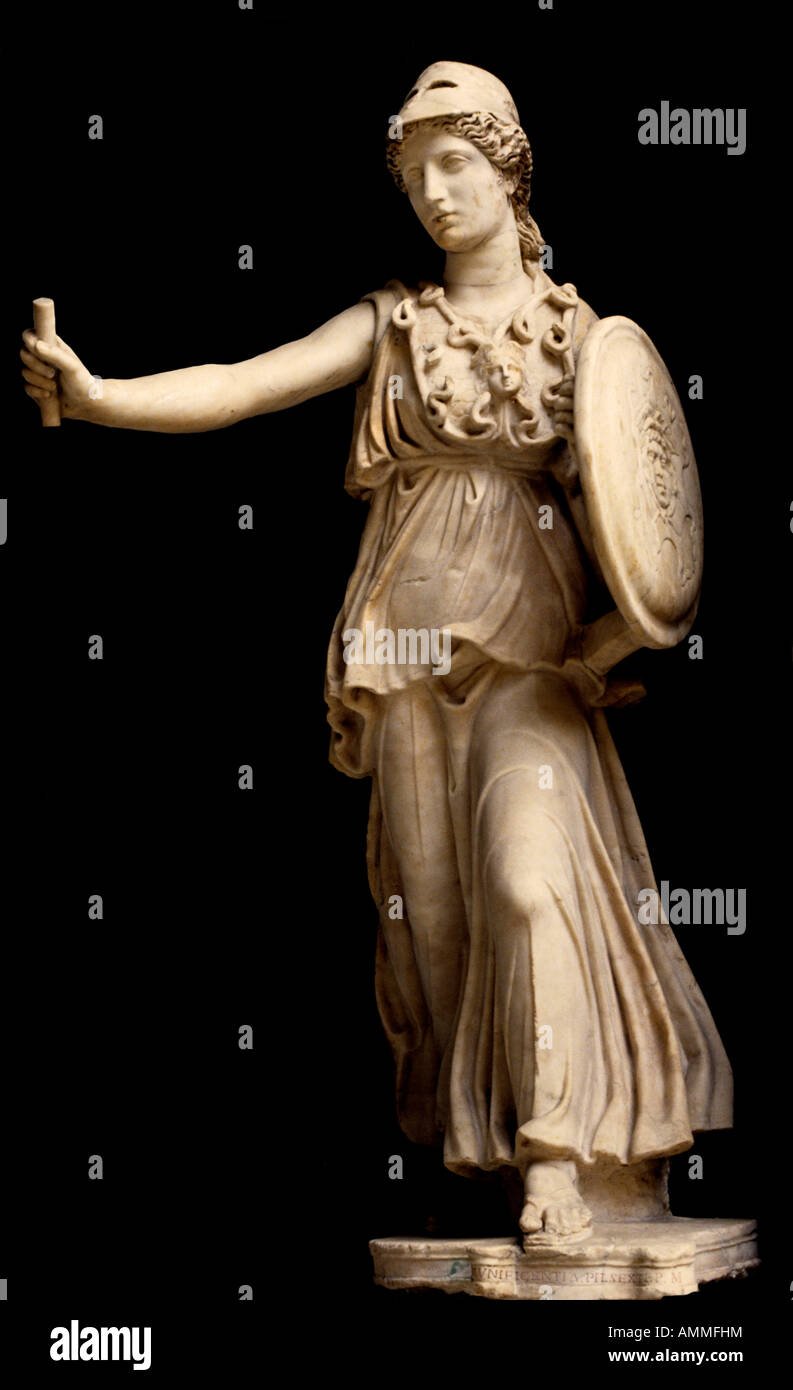
When a local statue sparks a heated debate about whether it depicts Athena or Minerva, it's more than just an art history quiz. It's an invitation to delve into the fascinating, nuanced world of ancient deities, compelling us to consider the profound cultural differences that shaped their identities. This discussion is crucial for anyone interested in deciphering the rich tapestry of classical mythology, especially when Comparing Athena: Roman Minerva and Other Deities and seeking to understand their enduring relevance.
Is Minerva simply Rome's version of Greece's Athena, or do they possess distinct qualities worthy of individual appreciation? The answer, as with most things in history and mythology, is wonderfully complex. While undoubtedly linked through syncretism—the blending of religious beliefs—these goddesses embody unique cultural values and spheres of influence that merit closer examination.
At a Glance: Athena vs. Minerva
- Athena (Greek): Goddess of strategic warfare, wisdom, and crafts. Born fully formed from Zeus's head, she's the protector of Athens, revered for intellectual prowess and measured combat. Symbolized by the owl.
- Minerva (Roman): Roman goddess, syncretized with Athena, but with expanded domains. She champions poetry, artistry, medicine, practical craftsmanship, and wisdom in application. Also emerged from Jupiter's head, and a protector of the state.
- Key Distinction: While both share wisdom, war, and crafts, Minerva emphasizes the practical application of skills and a broader spectrum of arts and healing, reflecting Roman values of utility and diverse achievement.
Why This Matters Now: Beyond Just Statues
You might wonder why distinguishing between two ancient goddesses matters in our modern world. Yet, the current community debate about that statue isn't just about correct identification; it's about cultural literacy and appreciating how deeply mythology reflects the societies that created it. Understanding these distinctions allows us to:
- Deepen Historical Accuracy: Properly interpret ancient art, texts, and archaeological findings.
- Appreciate Cultural Nuance: Recognize how Greek philosophical thought diverged from Roman pragmatism and statecraft.
- Inform Modern Symbolism: Ensure that when we invoke "wisdom" or "strategy" today, we do so with a rich, accurate understanding of its historical roots.
This isn't merely an academic exercise. It's about empowering you to look at a piece of history and see beyond a superficial resemblance, grasping the distinct cultural values each deity represented.
Athena: The Greek Paragon of Strategic Wisdom and Measured War
Imagine a goddess springing forth, fully armed and brilliant, not from a womb, but directly from the very mind of Zeus, the king of the gods himself. That's Athena, the quintessential Greek deity embodying strategic warfare, profound wisdom, and intricate craftsmanship. Her birth narrative immediately sets her apart: she is thought manifest, intelligence personified.
The Greeks revered Athena not as a goddess of brute force or destructive rage—that was Ares' domain—but as the mistress of calculated tactics, defensive warfare, and cunning strategy. She often intervened in heroic tales, offering guidance rather than direct combat, such as her aid to Odysseus during his arduous journey home. This focus on intellect over aggression is central to her identity.
Beyond the battlefield, Athena presided over practical arts like weaving, pottery, and metallurgy. She was the patroness of artisans, imbuing them with the skill and ingenuity to create masterpieces. Her connection to wisdom was so profound that she was often depicted with an owl, a creature long associated with sagacity. Philosophers like Socrates and Plato frequently invoked her name, not just as a deity, but as a symbolic representation of the logical thought and reasoned discourse central to Athenian democracy. Explore Goddess Athena to delve deeper into her myriad roles and stories. She was, quite literally, the protector of Athens, the city named in her honor, her temple, the Parthenon, standing as a testament to her importance.
Minerva: Rome's Multifaceted Matron of Minds and Makers
Now, shift your gaze across the Mediterranean to ancient Rome. Here, we encounter Minerva, a goddess who, while clearly syncretized with Athena, evolved to embody a distinctly Roman spirit. Like Athena, Minerva sprang from the head of Jupiter (Zeus's Roman counterpart), solidifying her connection to intellectual birth and divine wisdom. However, Rome's emphasis on practicality, civic duty, and a broader array of public life meant Minerva's portfolio expanded.
Minerva was indeed associated with strategic warfare, often depicted in a helmet and armor, much like Athena. She was seen as a protector of the state, ensuring its tactical success. Yet, her influence reached far beyond the martial. She was a major patron of poetry, music, medicine, and all forms of craftsmanship. Roman artisans, writers, and healers looked to Minerva for inspiration and guidance. Her temple on the Aventine Hill in Rome was a vibrant center for artisans, a place where guilds thrived under her watchful eye.
Consider the Roman appreciation for applied knowledge. While Greek philosophy sought truth for its own sake, Roman thought often bent towards what was useful, what built empires, what created lasting structures and institutions. Minerva perfectly encapsulated this. Her wisdom wasn't just about abstract thought; it was about the practical application of skill, intelligence, and creativity to benefit society and the state. She encouraged invention, fostered learning, and championed the arts as vital components of a civilized and powerful society.
Distinct or Duplicates? Unpacking the Core Differences
At first glance, the similarities are striking: born from the head of the chief god, goddesses of wisdom, warfare, and crafts. So, what truly sets them apart? The answer lies in the subtle yet significant cultural lenses through which each society viewed its divine patroness.
The Nuance of Wisdom: Intellect vs. Application
- Athena's Wisdom: Primarily intellectual and strategic. Her wisdom is about profound insight, tactical brilliance, and reasoned judgment. Think of her guiding heroes or advising assembly members—her focus is on high-level strategic thought and ethical decision-making.
- Minerva's Wisdom: Expands to encompass practical wisdom, ingenuity, and diverse artistic skill. While she possessed strategic intellect, her domain explicitly included poetry, medicine, and the applied arts. Her wisdom wasn't just in knowing, but in doing and creating. She was the muse for the sculptor, the inspiration for the poet, and the guiding hand for the healer.
The Scope of Warfare: Strategic Prowess vs. State Protection
Both goddesses are martial, but their emphasis differs:
- Athena's Warfare: Defined by strategic defense, calculated moves, and the protection of civilization from chaos. She disliked senseless violence and preferred diplomacy, resorting to war only when necessary and always with a clear objective.
- Minerva's Warfare: While strategic, was often framed more directly as the protection of the Roman state and its interests. Her role was intertwined with civic duty and the expansion or defense of the Roman Republic and later, the Empire. Her martial aspect felt more integrated into the Roman concept of national power and stability.
Cultural Context: Philosophical Ideals vs. Pragmatic Empire
This is perhaps the most crucial distinction.
- Greek Culture (Athena): Valued philosophical inquiry, democracy, and individual excellence. Athena's wisdom reflected this, emphasizing rational thought, ethical governance, and artistic purity. Her myths often explore complex moral dilemmas and the human condition.
- Roman Culture (Minerva): Centered on law, order, engineering, and the expansion and governance of a vast empire. Minerva's broader portfolio—encompassing medicine, various arts, and state protection—mirrors Rome's practical, results-oriented ethos. Her stories often highlighted contributions to Roman society and public life.
Iconography Nuances
While often depicted similarly with helmets, spears, and the aegis (a shield or breastplate), subtle differences can emerge. Athena might be more frequently shown with the owl, while Minerva might be more often seen with symbols relating to specific crafts or arts depending on the context of the sculpture or relief. The overall feel of the depiction—whether emphasizing intellectual gravitas or creative dynamism—can offer clues.
The Broader Pantheon: How Athena and Minerva Stand Out
To truly appreciate Athena and Minerva, it's helpful to briefly place them within the broader context of ancient pantheons. They are unique for their blend of intellect, craft, and measured warfare, a combination not typically found in other deities.
Consider other war gods: Ares (Greek) and Mars (Roman) were deities of brute force, uncontrolled rage, and the chaotic side of battle. While powerful, they lacked the strategic depth and intellectual gravitas of Athena and Minerva. They embodied the destructive aspects of war, whereas Athena and Minerva represented its strategic, defensive, and even constructive (through tactics and innovation) dimensions.
Similarly, when looking at wisdom deities, many cultures have figures associated with knowledge. However, few combine that wisdom so intimately with both the martial and the creative arts. This tripartite domain—strategic wisdom, skilled craftsmanship, and defensive warfare—makes Athena and Minerva exceptionally multifaceted. They weren't just about winning battles or crafting beautiful objects; they were about the intelligence behind both. They stood as pillars of reasoned action and inspired creation, distinguishing them from deities with narrower purviews.
Beyond the Myths: Enduring Legacy Today
The stories of Athena and Minerva are far from dusty relics. Their enduring legacies continue to shape our world, influencing concepts like:
- Education: Both goddesses are patrons of learning and knowledge, inspiring institutions dedicated to intellectual pursuit. Universities and academies worldwide draw on their symbolic power.
- Arts and Innovation: From architecture to poetry, their patronage of crafts and creative expression continues to resonate. Artists, designers, and innovators still strive for the kind of intellectual and practical excellence they personified.
- Female Empowerment: As powerful, independent female deities who were revered for their intellect and strength, they serve as timeless symbols of feminine capability and leadership, challenging traditional gender roles even in ancient societies.
- Strategic Thinking: In business, politics, and even personal development, the principles of strategic thinking, measured action, and innovative problem-solving echo the very essence of Athena's and Minerva's domains.
When you see a crest with an owl, or hear a discussion about "strategic advantage," you're witnessing the ripples of their ancient influence.
Common Misconceptions Debunked
Navigating ancient mythology can be tricky. Let's clear up a few common misunderstandings about these powerful goddesses.
- "They're exactly the same, just different names."
- Debunked: While Roman Minerva was syncretized with Greek Athena, her attributes expanded to reflect Roman cultural values, especially regarding practical application of wisdom, diverse arts (poetry, medicine), and state protection. They are distinct expressions of a similar core concept.
- "Minerva is just a weaker, Romanized version of Athena."
- Debunked: Not at all. Minerva wasn't "weaker"; her power and influence were simply directed towards different facets that were paramount in Roman society. Her emphasis on applied skills and the broader arts was a unique strength, not a dilution of Athena's qualities.
- "Why does it matter if we confuse them? It's just mythology."
- Debunked: It matters for cultural accuracy and appreciation. Conflating them ignores the rich historical context and distinct societal values that each goddess represented. Understanding these differences allows us to better grasp how ancient peoples viewed the world and how those views shaped their civilizations. It's about respecting the nuances of history.
Identifying Your Goddess: A Practical Guide for Modern Interpretations
So, when you encounter a statue or a reference, how can you discern whether it leans more towards Athena or Minerva? It's often about context and subtle cues:
- Iconography:
- Owl prominent? Stronger lean towards Athena.
- Symbols of diverse arts (lyre, physician's tools, specific craft implements) alongside martial gear? Points to Minerva.
- Aegis (often with Medusa's head)? Both share this, so it's not a sole differentiator.
- Focus on a specific type of helmet or shield? Roman-style military gear might lean Minerva.
- Architectural Context:
- Found in Athens or a Greek colony? Likely Athena.
- Found in Rome or a Roman province, especially near an artisan's guild or a public forum? Leans Minerva.
- Temple dedicated specifically to a goddess of strategy and pure wisdom? Athena.
- Temple serving as a center for multiple guilds or an academy? Minerva.
- Narrative Context:
- Story emphasizing cunning strategy in battle or philosophical debate? Athena.
- Story highlighting the invention of a craft, the healing of an ailment, or the creation of a piece of art? Minerva.
By asking these questions, you can move beyond simple visual resemblance to a deeper, more informed interpretation. For instance, a statue in a Roman museum depicted with a helmet, but surrounded by artisans' tools and a scroll, very likely represents Minerva, even if it shares a martial pose with Athena.
Moving Forward: Fostering Deeper Understanding
The debate over the local statue is a wonderful opportunity, not for division, but for education and enlightenment. By actively engaging with these distinctions, we foster a richer appreciation for the intricate tapestry of human belief and cultural evolution.
Encourage your local historians in their educational campaigns, attend those interactive exhibits, and participate in lecture series. These efforts clarify the unique attributes of Minerva and Athena, but more importantly, they deepen our community's awareness of how mythology reflects societal values. Appreciating these differences allows us to honor these figures not as interchangeable archetypes, but as distinct cultural beacons, each with a profound and unique message for our own time. In doing so, we don't just learn about the past; we gain sharper lenses through which to view our present and build our future.