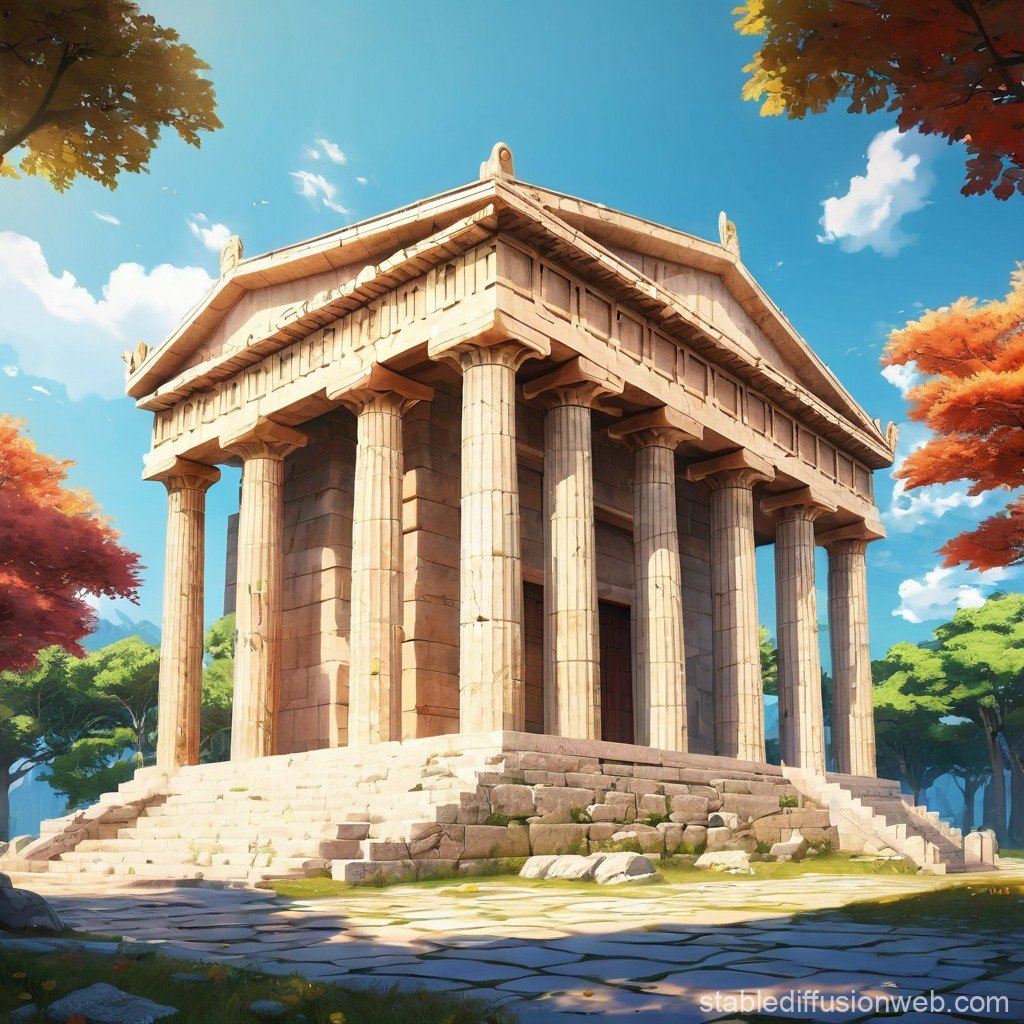
To truly understand Cult, Temples, and Ancient Greek Worship, you first have to shed modern notions of what "religion" even means. Forget dogma, sacred texts, or a centralized church. For the ancient Greeks, the sacred wasn't a set of beliefs you subscribed to; it was a vibrant, messy, integral part of daily life, civic identity, and the very fabric of their world—a dynamic tapestry of practices, stories, and shared customs.
It was about what you did, not what you believed.
At a Glance: Unpacking Ancient Greek Worship
- Practice Over Creed: Ancient Greek worship prioritized ritual actions (cult) like sacrifices and festivals over a fixed set of beliefs (creed).
- Polytheistic & Localized: They revered a vast pantheon of gods, goddesses, and lesser spirits, but practices varied significantly from city to city and even from cult to cult.
- No "Religion" as We Know It: The Greeks had no single word for "religion" and didn't categorize their worship; it was simply a shared cultural experience.
- Temples as Divine Homes: Temples primarily housed cult statues of deities, while actual worship—sacrifices and communal feasts—took place at altars outside the temple.
- Sacrifice Was Key: Animal sacrifice was the central act of communion between humans and gods, often culminating in a communal feast.
- Mythology Was Everywhere: Stories of gods, heroes, and monsters permeated their culture, shaping their understanding of the world but not functioning as "scripture."
- Diverse Paths: While public cults dominated, mystery religions offered a more personal, immersive, and often doctrine-rich spiritual journey for initiates.
Beyond "Religion": A World of Lived Sacred Practice
Imagine a world where the divine isn't separate from the mundane, but woven into every sunrise, every harvest, every victory, and every sorrow. That's the ancient Greek experience. Unlike modern faiths often defined by specific doctrines or sacred texts, the Greeks didn't have a single, unified "religion." Herodotus, the ancient historian, famously described the Hellenes as sharing "common shrines of the gods and sacrifices, and the same kinds of customs," highlighting a shared culture of worship rather than a codified belief system.
This meant that what truly mattered was cultus—the correct performance of rituals, offerings, and honors to the gods. Your devotion wasn't measured by your internal conviction, but by your active participation in public rites, household ceremonies, and festivals. It was a collection of "religious dialects" across the Greek world, not a centralized "religion," with changes regulated at the civic level. This local autonomy allowed for a rich tapestry of practices, ensuring that worship was deeply embedded in the identity of each city-state, or polis.
The Olympian Pantheon: A Divine Family, Earthly Concerns
At the heart of Greek worship lay a sprawling family of gods and goddesses, visualized in human form and possessing very human-like qualities—both virtues and vices. While immortal and powerful, they weren't all-good or all-powerful, often subject to the whims of fate (the Moirai) themselves.
Most Greeks recognized the Twelve Olympians: Zeus, Hera, Poseidon, Demeter, Athena, Ares, Aphrodite, Apollo, Artemis, Hephaestus, Hermes, and either Hestia or Dionysus. Each deity held dominion over specific aspects of the natural world and abstract concepts:
- Zeus: King of the gods, ruler of the sky, thunder, and lightning. He held a degree of control over other deities but was by no means almighty.
- Poseidon: Lord of the sea, earthquakes, and horses.
- Hades: Ruler of the Underworld and the dead (though not an Olympian, his domain was crucial).
- Helios: The sun personified.
- Aphrodite: Goddess of love, beauty, pleasure, and procreation.
These gods often had specific associations with certain cities. For instance, Athena was the revered patroness of Athens, her name synonymous with the city itself. If you're keen to dive deeper into her stories and significance, you can explore All about Goddess Athena to understand how deeply she was entwined with one of the most powerful city-states.
Beyond the Olympians, countless lesser supernatural beings, heroes, and local spirits demanded respect and offerings. Early Italian religions, like Etruscan and ancient Roman, would later be profoundly influenced by this rich Greek pantheon.
Temples and Sanctuaries: Sacred Spaces, Public Rites
When you picture an ancient Greek temple, you're looking at more than just a building. A temple (the naos or cella) was typically situated within a larger, often walled, sacred precinct known as a sanctuary (temenos). These sanctuaries were vibrant hubs, often including subsidiary buildings, groves, springs, and even offering legal asylum.
Crucially, the temple itself was not a place of congregational worship in the modern sense. Its primary purpose was to house the cult image—a statue of the deity, usually facing the door—which was believed to embody the god's presence. All the actual sacrifices, libations, and major rituals took place outside the temple, at an altar within the wider precinct. Over centuries, these sanctuaries accumulated an astonishing array of statues, shrines, votive gifts, and even military trophies, effectively becoming ancient museums and centers of civic pride.
Some sanctuaries gained pan-Hellenic fame as oracles, places where mortals could seek divine guidance. The most renowned was the Pythia, Apollo's priestess at Delphi, whose cryptic pronouncements influenced politics and personal lives across the Greek world. Another famous oracle was at Dodona, sacred to Zeus.
Cult Images: More Than Just Statues
These divine effigies were central to Greek worship. Early images (xoana) were often primitive wooden forms, revered for their antiquity. Over time, materials became more sophisticated: marble, terracotta, bronze, and the awe-inspiring chryselephantine statues crafted from ivory and gold, like Phidias' monumental Zeus at Olympia or Athena Parthenos in the Parthenon. Some images even wore real clothes and jewelry, treated as living representations of the deity.
Access to the temple's cella (where the cult image resided) varied by local rules. While generally accessible to Greeks (including slaves) after a sacrifice or gift, restrictions could apply based on day, class, race, gender (e.g., virgins only, no women), purity, or origin. Visitors would pray before, and sometimes even touch, the cult image, reinforcing the intimate connection between the worshipper and the divine.
The Heart of Worship: Sacrifice, Libations, and Offerings
The most fundamental act of Greek worship was sacrifice. This wasn't just a ritual; it was the primary means of communication and communion between mortals and immortals, a shared meal binding the two realms.
Animal Sacrifice:
Typically performed at outdoor altars, animal sacrifice was a highly structured event:
- Procession: A domestic animal (sheep, goats, pigs, poultry were common; bulls/oxen were preferred for major festivals but less frequent) was decorated with ribbons and garlands and led in a procession to the altar. The Greeks believed the animal was a willing participant, often ensuring this by sprinkling water on its head to make it nod.
- Slaughter: After prayers and libations, the animal's throat was cut, and its blood was poured onto the altar.
- Offerings to the Gods: The inedible parts—offal, bones, and fat—were burnt on the altar, creating smoke that ascended to the heavens, a symbolic meal for the deity.
- Communal Feast: The remaining meat was cooked and shared among the participants. Leading figures would taste it on the spot, and large festivals (hecatombs) could involve hundreds of cattle and thousands of feast-goers, emphasizing community and shared devotion. Temples often kept the valuable skins to sell.
For chthonic (underworld) deities, a holocaust sacrifice was performed, where the entire animal was burnt, reflecting a more ancient, pre-Hellenic tradition.
Beyond Animal Sacrifice:
- Libations: Pouring liquid offerings, usually wine, olive oil, or honey, was a ubiquitous act, performed at shrines, altars, and even as part of daily meals and symposia.
- Votive Deposits: Gifts of food, drinks, precious objects, small statues, or inscribed tablets were left at sanctuaries as tokens of gratitude, requests, or commemoration.
- First Fruits: Simple offerings of the earliest produce from crops or plants were common, symbolizing thanks for nature's bounty.
- Incense: Burnt as an aromatic offering to the gods.
Rites of Passage & Civic Rituals:
Religion permeated life's milestones. The amphidromia, a ritual performed on the fifth or seventh day after a child's birth, formally introduced the infant to the household and the community. In times of crisis, a ritual called pharmakos might be enacted, where a symbolic scapegoat—often a marginalized person—was ritually expelled from the city, believed to carry away its misfortunes.
Festivals: Community, Spectacle, and Devotion Unleashed
Life in ancient Greece was punctuated by a vibrant calendar of religious festivals, often a blend of solemn ritual, boisterous celebration, and athletic or artistic competition. Many were specific to a deity or city-state, while others, like the Panhellenic Games, drew participants from across the Greek world.
- City-State Festivals: Athens alone had about 140 religious festival days annually. The Panathenaia, dedicated to Athena, was a grand spectacle featuring processions, athletic contests, musical performances, and the presentation of a new woven robe (peplos) to the goddess's cult statue. The Dionysia honored Dionysus with theatrical performances, giving rise to Greek tragedy and comedy.
- Panhellenic Games: The Olympic Games at Olympia, the Pythian Games at Delphi, the Isthmian Games near Corinth, and the Nemean Games were all deeply religious festivals, often accompanied by massive sacrifices and feasts, fostering a sense of shared Greek identity.
- Women's Festivals: Segregated, women-only festivals like the Thesmophoria (honoring Demeter) and the Plerosia focused on agricultural fertility and reinforced traditional female roles, providing women with a distinct religious identity and community.
Mythology: The Grand Narratives of Gods and Heroes
Ancient Greek religion was inseparable from its vast and intricate mythology. These weren't just bedtime stories; they were accounts of the world's origins, the nature of the gods, their interactions with humans, and the epic feats of heroes. While there were no "sacred texts" in the revealed scripture sense, works like Homer's Iliad and Odyssey and Hesiod's Theogony were considered authoritative and perhaps divinely inspired.
- Cosmogony: Hesiod's Theogony describes the primordial deities (Chaos, Gaia, Tartarus, Eros) giving birth to the powerful Titans, who were eventually overthrown by the Olympians in a cosmic struggle.
- Divine and Human Interactions: Myths explored the often tumultuous relationships between gods and mortals, resulting in demigod heroes like Heracles, Achilles, and Perseus, or tragic figures like Oedipus and Medea.
- Creatures of Legend: The world was populated by a rich array of fantastic beings: wise centaurs, playful nymphs (dryads, Nereids), mischievous satyrs, and terrifying monsters like the Cyclopes, Gorgons, and the Minotaur.
These narratives, preserved in epic poetry, plays, and later influencing Roman mythology, became foundational to Western literature and art, experiencing renewed popularity in post-Renaissance Europe.
Morality and the Afterlife: Beyond Earthly Concerns
While cult practice was paramount, the Greeks also grappled with moral concepts and the fate of the soul.
Morality:
A central moral concept was the aversion to hubris—excessive pride or defiance towards the gods. In Athens, hubris was even a crime, encompassing acts from rape to desecration of holy sites. Moderation in all things was highly valued, with excess in pride, eating, or drinking seen as improper. Unlike some modern interpretations, pride itself wasn't inherently negative; it only became so when it turned harmful or all-consuming. Both physical prowess (athletics) and intellectual pursuit were equally esteemed.
The Afterlife:
The common belief held that spirits of the dead journeyed to the Underworld, ruled by Hades. For most, this was a shadowy, disembodied existence. However, the concept evolved:
- Tartarus: A place of torment for the wicked.
- Elysium (Elysian Fields): A paradise for the virtuous and favored heroes.
- Mystery Cults: In the Archaic age, cults like the Eleusinian Mysteries introduced a more detailed "map" of the afterlife, promising initiates a blessed existence in Elysium.
- Philosophical Views: While a minority, philosophers like Pythagoras and Plato embraced the idea of reincarnation. Epicurus, conversely, taught that the soul dissolved at death.
Sacred Texts? The Greek Way of Knowing
A key difference from many modern religions is the absence of "revealed" scripture in ancient Greece. There was no single holy book dictating doctrine or moral code handed down directly from a god.
However, certain ancient texts held immense authority:
- Homer's Iliad and Odyssey
- The Homeric Hymns
- Hesiod's Theogony and Works and Days
- Pindar's Odes
These works, often beginning with an invocation to the Muses, were considered inspired and formed a widely accepted cultural canon, shaping perceptions of the gods and heroes. Yet, they weren't inviolable; philosophers like Plato criticized the anthropomorphic myths for their "low moral tone."
Within specific mystery cults, certain texts were considered canonic for their praxis, such as the Orphic texts. Oracle pronouncements, while divinely inspired, were performative and never consolidated into sacred texts. Other compositions for religious events remained liturgical rather than scriptural.
The Role of Women: Priestesses and Private Rites
While often restricted in public life, women played a vital and esteemed role in Greek religious practice.
- Priestesses (hiereiai or amphipolis): Women served as priestesses for both goddesses and gods, holding significant social recognition and sometimes enjoying luxuries. They typically came from elite families, and roles could require virgins or married women. Priestesses gained increased social and legal status and often received public burials. Like male priests, they needed to be healthy and of sound mind.
- Gendered Rituals: Specific rituals had gendered divisions. For example, the Pythia, Apollo's oracle at Delphi, was a woman, and the Gerarai served Dionysus.
- Women-Only Festivals: Festivals like the Thesmophoria provided women with an exclusive religious identity and agency, focusing on agricultural fertility and reinforcing traditional lifestyles.
- Household Worship: Women were central to household rituals, maintaining the sacred hearth and venerating small images of domestic deities, integrating the gods into daily family life.
Beyond Public Cults: The Call of Mystery Religions
For those seeking a deeper, more personal, or perhaps more spiritually satisfying experience than the public cults offered, mystery religions provided an alternative. These cults required initiation, bound adherents by secret rites, and promised a mystical awakening, a more systematic doctrine, and often a clearer "map" of the afterlife. They fostered communal worship and spiritual fellowship among initiates.
Some mystery cults were ancient and local, like the renowned Eleusinian Mysteries (dedicated to Demeter and Persephone) or the rites on the island of Samothrace. Others, like the cult of Dionysus, spread widely. During the Hellenistic period and the Roman Empire, exotic mystery cults from Egypt and Asia Minor—such as those of Isis, Atargatis, Cybele, Mithras, and Osiris—gained immense popularity across the Greek world, signaling a growing desire for more immersive and emotionally resonant forms of spirituality.
A Journey Through Time: Evolution and Endurance
Greek worship was not static; it evolved significantly over millennia.
- Origins: Drawing from Proto-Indo-European religion and incorporating elements from Neolithic Greece, Mycenaean religion already shows continuity with later Greek practices, with Poseidon possibly a chief deity. Minoan religion and Near Eastern cultures also exerted influence. By the Homeric epics, the Twelve Olympians were well-established.
- Archaic and Classical Periods (c. 800–323 BCE): This was the heyday of the city-state, and religion became deeply intertwined with civic life. Stone temples flourished, and priests were often local elites. Panhellenic sanctuaries like Delphi and Olympia fostered a sense of Greek unity. However, philosophers like Xenophanes, Plato, and Aristotle began to critically examine or even question the anthropomorphic nature and ethics of the Olympian gods.
- Hellenistic Period (323–146 BCE): With the rise of empires, new dynasties lavished wealth on temples, integrating themselves into cults. Imported deities (Isis, Cybele) and philosophical movements (Platonism, Stoicism, Epicureanism) gained prominence, often blending with traditional beliefs. This era saw the development of Hellenistic astrology and the creation of hybrid deities like Serapis, reflecting a more syncretic spiritual landscape, which likely lessened the traditional pantheon's influence, particularly among the educated.
- Roman Empire (146 BCE onwards): After the Roman conquest, Greek religion was largely absorbed into Roman religion, with Greek gods equated with Roman counterparts (Zeus became Jupiter, Hera became Juno). While Romans built few new temples in Greece, the Imperial cult (worship of the emperor) gained prominence. New cults continued to arrive from the East.
- Decline and Suppression: The syncretic nature of Greco-Roman polytheism, coupled with the rise of Christianity, gradually led to its decline. Constantine I's Edict of Milan (313 CE) legalized Christianity. Emperor Julian (361-363 CE) famously attempted a revival, creating a centralized pagan priesthood and promoting a syncretic "Hellenism," but his efforts were short-lived. Theodosius I (381 CE) initiated official persecution, strictly enforcing anti-pagan laws, disbanding priesthoods, destroying temples, and prohibiting public and private worship. The Olympic Games, last held in 393 CE, were likely suppressed. While open worship was curtailed, paganism persisted in rural areas for centuries.
- Pagan Continuation & Modern Revivals: Neoplatonist philosophers overtly practiced Hellenic paganism in Late Antiquity, and Byzantine scholars preserved much non-Christian material. Greek religion and philosophy experienced revivals during the Renaissance. Today, Hellenism (or Hellenic National Religion) continues as a modern revival, blending Neoplatonic thought with classical cult practices.
Your Takeaway: The Enduring Legacy of Greek Sacred Practice
Ancient Greek worship, far from being a simple, unified "religion," was a complex, localized, and profoundly lived experience. It was a world where gods walked the earth, heroes shaped destiny, and every aspect of life—from civic governance to household chores, from athletic contests to dramatic performances—was interwoven with sacred meaning.
Understanding this dynamic system of cult, temples, and mythology is not just about historical curiosity; it's essential for comprehending the art, architecture, literature, and philosophical thought that emerged from this foundational civilization. It reveals a worldview where the divine was constantly present, demanding reverence not primarily through unwavering belief, but through diligent, joyous, and communal practice. The echoes of these sacred practices continue to resonate, shaping our understanding of spirituality, community, and the very human need to connect with something larger than ourselves.